Technology
We build with modern stacks and proven tools to ship reliable, scalable products.


Forging the future with technology, equipment, and software
Technology stands as a transformative force for organizations—a calling we embrace wholeheartedly. Our joy lies in empowering businesses like yours to become pioneers of disruption. As thought leaders and experts in our field, we take pride in our mastery of technology.
Our reach extends globally, equipping us with the capability to harness technology as a valuable asset, enabling our clients to flourish and expand. We leverage technology to aid you in achieving your objectives and fostering stronger connections with your clientele. Our focus isn't solely on technology; rather, we prioritize deploying the optimal solution for every scenario. It's about utilizing technology to revolutionize enterprises, drive profitability, challenge conventional thinking, and reshape markets. At DIS, we deliver bespoke technological solutions tailored to enhance your business.
Our Expertise
Artificial Intelligence & Machine Learning
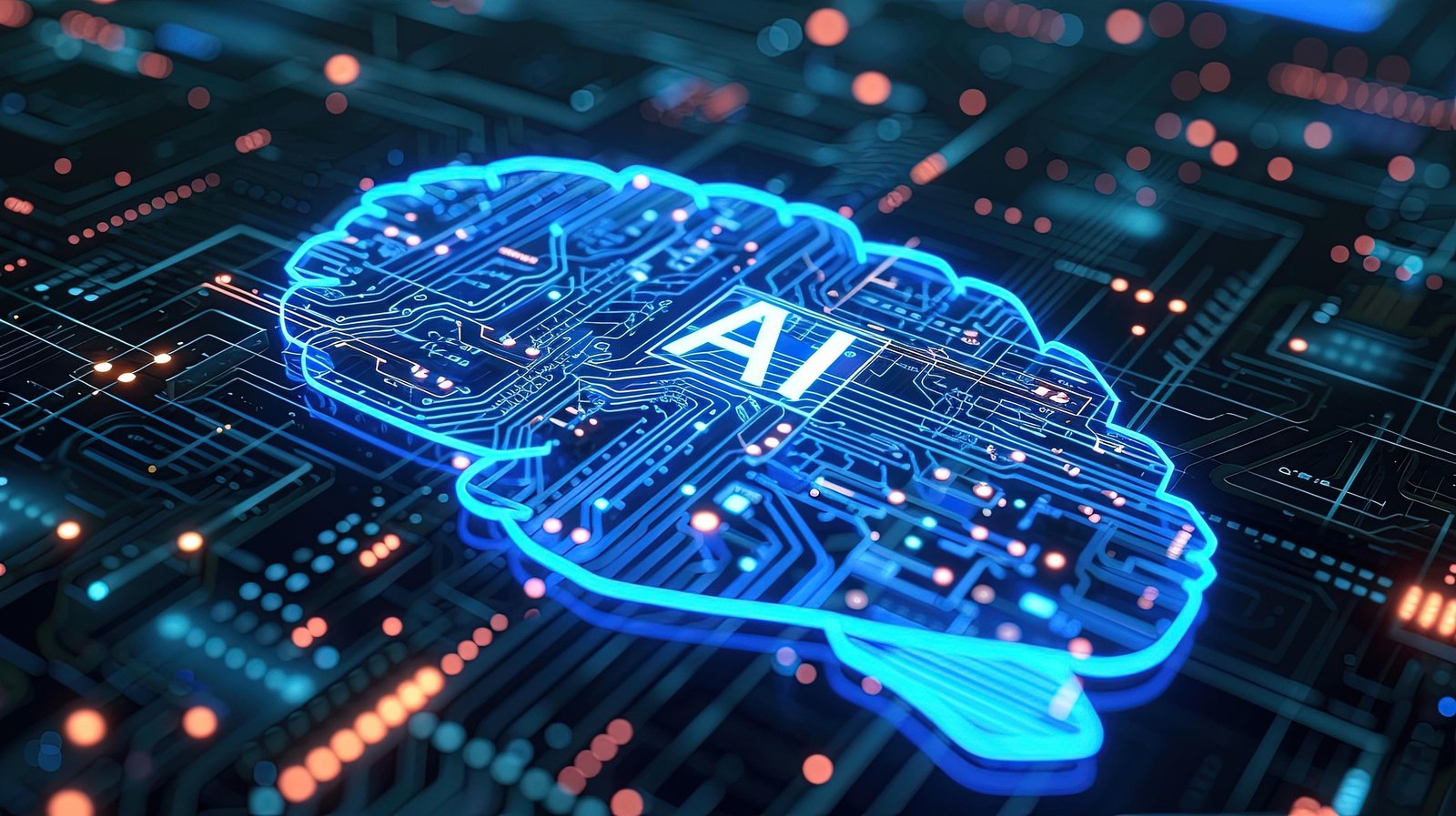
At Emergyn, artificial intelligence is more than a buzzword-it is a practical capability we embed into web, mobile, and cloud products. We combine modern software engineering with proven AI frameworks to help businesses automate workflows, extract insights from data, and deliver intelligent user experiences that create measurable value.
Our AI practice spans intelligent automation, natural language processing, computer vision, predictive analytics, and custom model integration. Whether you are exploring a proof of concept or scaling production-grade AI features, we focus on secure, maintainable solutions aligned with your business goals-not experiments that never ship.
AI Technologies & Capabilities
- AI-Powered Automation: Streamline repetitive tasks across operations, support, and back-office workflows with rule-based and ML-driven automation.
- Generative AI & LLMs: Integrate large language models for chat assistants, content generation, document Q&A, and knowledge-base search-with guardrails for accuracy and privacy.
- Predictive Analytics: Forecast demand, detect anomalies, and support data-driven decisions using structured and unstructured business data.
- Computer Vision: Image classification, object detection, and visual inspection for quality control, security, and retail use cases.
- MLOps & Model Deployment: Train, version, monitor, and serve models on cloud infrastructure with CI/CD practices built for AI workloads.
- Responsible AI: Security, access control, auditability, and performance tuning so AI features remain trustworthy in production.
We work with leading tools and platforms-including Python, TensorFlow, PyTorch, OpenAI APIs, Azure AI, AWS AI services, and Google Cloud AI-selecting the right stack for each use case.

MERN Stack Development
We've evolved into a global powerhouse, equipped with the ability to leverage technology as a valuable asset for our clients' growth and expansion. Our utilization of technology is geared towards aiding you in reaching your goals and fostering stronger customer relationships. Our focus isn't solely on the technology itself; rather, we prioritize deploying the best solution tailored to each situation. Our aim is to harness technology that transforms enterprises, boosts profits, challenges conventions, and disrupts markets. At DIS, we offer select technologies to drive your business forward.
The MERN stack's lightweight and efficient design patterns, such as Model/View/Controller (MVC), have ushered in a new era of constructing powerful, swift, and scalable online applications. With MERN components, even the most complex projects can be developed swiftly and delivered faster than ever before. MERN Stack represents the future of online and app development, offering comprehensive web app solutions from client to server to database utilizing the technologies mentioned above.

Benefits of MERN Stack
- Single Language: MERN (MongoDB, Express.js, React.js, Node.js) stack allows developers to use JavaScript throughout the entire development process, from backend to frontend, resulting in a more seamless and efficient development experience.
- React Native Integration: React.js, a part of the MERN stack, is also used for building mobile applications through React Native, enabling developers to leverage their existing knowledge and codebase for both web and mobile app development.
- Flexibility and Scalability: MongoDB, a NoSQL database used in the MERN stack, offers flexibility in data modeling and scalability, allowing applications to handle large volumes of data and adapt to changing requirements easily.
- Rich Ecosystem: The MERN stack benefits from a vast ecosystem of libraries, tools, and resources, supported by a large and active community of developers, which helps streamline development and resolve issues quickly.
MEAN Stack Development
The MEAN stack, comprising MongoDB, Express.js, AngularJS, and Node.js, offers a comprehensive and modern approach to web development. At its core, MEAN emphasizes the use of JavaScript throughout the entire development stack, ensuring a consistent and efficient development experience. MongoDB, a NoSQL database, provides flexibility in data modeling and scalability, enabling developers to adapt quickly to changing requirements and handle large volumes of data efficiently. Express.js, a minimalist web application framework, simplifies the process of building robust and scalable server-side applications with its streamlined routing and middleware features. AngularJS, a powerful frontend framework, facilitates the creation of dynamic and interactive web applications with its two-way data binding and modular architecture. Finally, Node.js, a server-side JavaScript runtime environment, enables developers to build scalable and high-performance server-side applications with its non-blocking I/O model and event-driven architecture.
The MEAN stack offers several advantages, including a unified development language and a rich ecosystem of libraries and tools. By using JavaScript for both frontend and backend development, developers can maintain consistency in coding practices and collaborate more effectively across teams. Additionally, the MEAN stack leverages JSON (JavaScript Object Notation) for data exchange between the client and server, providing a lightweight and standardized format that simplifies data handling and improves application performance. With its focus on scalability, performance, and flexibility, the MEAN stack is well-suited for building modern web applications that can adapt to the evolving needs of businesses and users alike.
Benefits of MEAN Stack
- Consistent Language: MEAN (MongoDB, Express.js, AngularJS, Node.js) stack also allows developers to use JavaScript for both backend and frontend development, ensuring consistency in coding practices and facilitating smoother collaboration between frontend and backend teams.
- Powerful Frontend Framework: AngularJS, a part of the MEAN stack, provides a robust frontend framework with features like two-way data binding and dependency injection, making it easier to build dynamic and interactive web applications.
- JSON-based Data Exchange: MEAN stack applications use JSON (JavaScript Object Notation) for data exchange between the client and server, offering a lightweight and standardized format that simplifies data handling and improves application performance.
- Scalability and Performance: Node.js, the backend runtime environment in the MEAN stack, is known for its non-blocking I/O model and event-driven architecture, which enables scalable and high-performance server-side applications capable of handling concurrent requests efficiently.
LAMP Stack Development
The LAMP stack, an acronym for Linux, Apache, MySQL, and PHP/Python/Perl, has been a cornerstone of web development for decades. At its foundation, Linux provides a robust and stable operating system that powers the server environment. Apache, an open-source web server software, serves as the backbone of the LAMP stack, handling HTTP requests and serving web content efficiently. MySQL, a popular open-source relational database management system (RDBMS), offers a reliable and scalable solution for storing and managing data. Finally, PHP, Python, or Perl serve as the server-side scripting languages, enabling dynamic content generation and interaction with the database. Together, these components form a versatile and flexible stack that has been widely adopted for building a wide range of web applications, from simple blogs to complex enterprise systems.
The LAMP stack offers several advantages, including its open-source nature, ease of use, and extensive community support. As an open-source stack, LAMP provides developers with access to a wealth of resources, libraries, and tools, allowing for rapid development and innovation. Additionally, the LAMP stack is highly customizable, with developers having the flexibility to choose from a variety of technologies and configurations based on their specific requirements. Moreover, the LAMP stack is platform-independent, meaning it can run on a wide range of operating systems, including Linux, Windows, and macOS, making it accessible to developers regardless of their preferred development environment. With its reliability, scalability, and versatility, the LAMP stack remains a popular choice for building robust and scalable web applications.

Benefits of LAMP Stack
- Low-cost website hosting
- Excellent HTML compatibility
- Wonderful flexibility and concept mapping
- Amazing Website loading speed
- Multiple database connectivity choices
- Enormous library of open-source addons
React Native Development
Thanks to its robust features and the capability to tap into native functionalities on each platform, React Native has emerged as the leading choice for crafting sophisticated hybrid apps that offer a seamless user experience. React Native, or RN for short, stands as a popular JavaScript-based mobile app framework enabling the creation of native-looking iOS and Android applications. With this framework, developers can build applications for various platforms using a single codebase.
What sets React Native apart from other cross-platform app development approaches like Cordova or Ionic is its utilization of the host platform's native rendering APIs. Unlike methods relying heavily on webviews to display mobile applications built with a mix of JavaScript, HTML, and CSS, React Native leverages the standard rendering APIs of the host platform. While the traditional approach can be effective, it comes with performance limitations and often lacks access to native UI elements of the host platform.

Benefits of React Native
- Cross-Platform Development: React Native allows developers to write code once and deploy it on both iOS and Android platforms, saving time and effort in maintaining separate codebases.
- Native Performance: React Native bridges the gap between JavaScript and native components, resulting in apps that perform as well as those developed using native languages like Swift or Java.
- Faster Development: With its hot reload feature, React Native enables developers to see changes in real-time without recompiling the entire app, speeding up the development process significantly.
- Large Community and Ecosystem: React Native has a vast community of developers contributing to its ecosystem, offering a wide range of libraries, tools, and resources to streamline development and address various needs.